Prepare for onion downy mildew
October 9, 2024
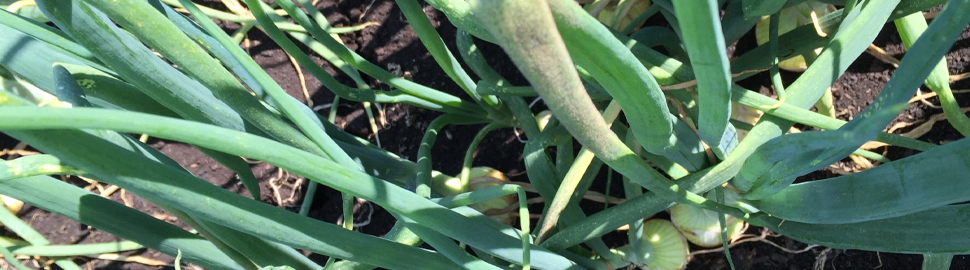
In a typical year, we tend to see onion downy mildew alerts in late July and August due to cooler nights and longer dew periods. This destructive disease thrives in cool, wet, and humid conditions.
Sometimes, we see alerts earlier in the season, when seasonal weather patterns and agronomic practices, like overhead irrigation, create conditions for infection before we expect.
So, what can be done to figure out when onions are at risk for downy mildew, regardless of calendar date?
Watch the weather
- Onion downy mildew develops at temperatures <22°C. Short periods of leaf wetness (2-6 hr) at cool temperatures (3-14 °C) lead to successful infection, and it can take up to 16 days for symptoms to become visible.
- Hazy, misty, foggy mornings are great times to scout for early signs and symptoms of onion downy mildew.
- Learn how to identify blight in onions.
Leverage available knowledge and data
- What’s happening in your neighbourhood? Mildew is airborne, a community disease. Tap into your network of scouts, agronomists, and crop reports for updates on local conditions.
- In some regions, disease forecasting models are available to help predict onion downy mildew outbreaks. Check with your local provincial specialist to determine what models are available for your area .
- Attend winter meetings and conferences to understand what is working well in the local area.
Implement downy mildew management strategies
- Apply fungicides preventatively, when conditions are favourable for disease but before infection.
- Rotation of fungicide groups and/or mixing two groups together.
- Using cultural control practices like choosing less-sensitive varieties, promoting air circulation, field rotation
Use the right tool for the right conditions for onion downy mildew:
Orondis
® Gold DC is a systemic fungicide combining the powerful activity of Ridomil
® (metalaxyl, Group 4) and potency of Orondis
® (oxathiopiprolin, or OXTP a Group 49). It does not require a surfactant. Apply at 0.4L/ac preventatively for best results.

Revus
® (Group 40) is a good rotational partner for Orondis Gold for resistance management. It features translaminar movement through the leaf and slight systemic movement. Apply at 0.16 L/ac with a non-ionic surfactant (0.25% v/v).

Ridomil Gold
® 480SL (Group 4) was registered in 2025 and is a great rotational partner for Orondis Ultra or other non-group 4 fungicides targeting downy mildew. Known for its’ potency, Ridomil can be applied at 84.2mL/ac. Be sure to tank mix with another fungicide targeting downy mildew and follow label tank mix restrictions when doing so.

Orondis
® Ultra (Group 40 + 49) is a systemic fungicide that moves into new growth and provides long-lasting control. Apply at 0.16 L/ac; a penetrating surfactant such as LI700 (0.125% v/v) is highly recommended.
Always read and follow label directions. Orondis
®, Revus
®, Ridomil Gold
® and the Syngenta logo are trademarks of a Syngenta Group Company. All other trademarks are the property of their respective owners.
